Why You Need a Website Alongside Your Therapy Directory Listing
When you begin working as a therapist, counsellor or psychotherapist, one of your first steps towards finding clients will often be creating profiles on professional directory websites.
These listings are incredibly useful. They help potential clients see that you are qualified, registered with the relevant professional bodies, and working within a recognised framework. They also give people a quick way to find therapists based on location, specialism, therapy type and availability.
But while a directory profile is an important starting point, it can only go so far.
The challenge comes when someone is looking through several therapists in their area and trying to decide who feels like the right fit. By design, most directory profiles follow a similar structure. They include the essential information, but they do not always give you the space to fully communicate your personality, your approach or what it might actually feel like to work with you.
That is where your own website can make a difference.
A website gives you the opportunity to expand on your directory profile, build trust and help potential clients feel more connected to you before they take the step of getting in touch.
What your therapy directory listing does well
Your directory listing plays an important role in your online presence. It can help potential clients find you and quickly understand the basics of your practice.
A good directory profile can:
Show that you are a qualified therapist registered with a professional body
Share the areas you specialise in
Explain the therapy types you offer
Show where you are based
Give an indication of your pricing and availability
Provide a simple way for someone to contact you
For many potential clients, your directory profile may be the first place they come across you. It gives them a level of reassurance and helps them understand whether you might be relevant to their needs.
What your directory listing cannot fully communicate
The difficulty with relying only on a directory profile is that it gives you limited room to show who you are and how you work.
When someone is looking for a therapist, they are not just comparing qualifications, locations and fees. They are also trying to sense whether they would feel comfortable speaking to you. They may be feeling anxious, uncertain, overwhelmed or vulnerable. Before they make contact, they want to feel a degree of safety and connection.
A directory profile cannot always fully communicate:
Your personality and warmth
What it feels like to work with you
The atmosphere of your therapy space
Your wider story and experience
A deeper explanation of your approach
What clients can expect before, during and after a first session
Your values and the way you support people
Helpful resources, articles or guidance
Your visual identity and overall tone
This does not mean your directory profile is not important. It simply means it works best when it is supported by a website that gives people more context.
How your website supports your directory profile
Your website allows you to take the information from your directory listing and expand it into something more personal, useful and reassuring.
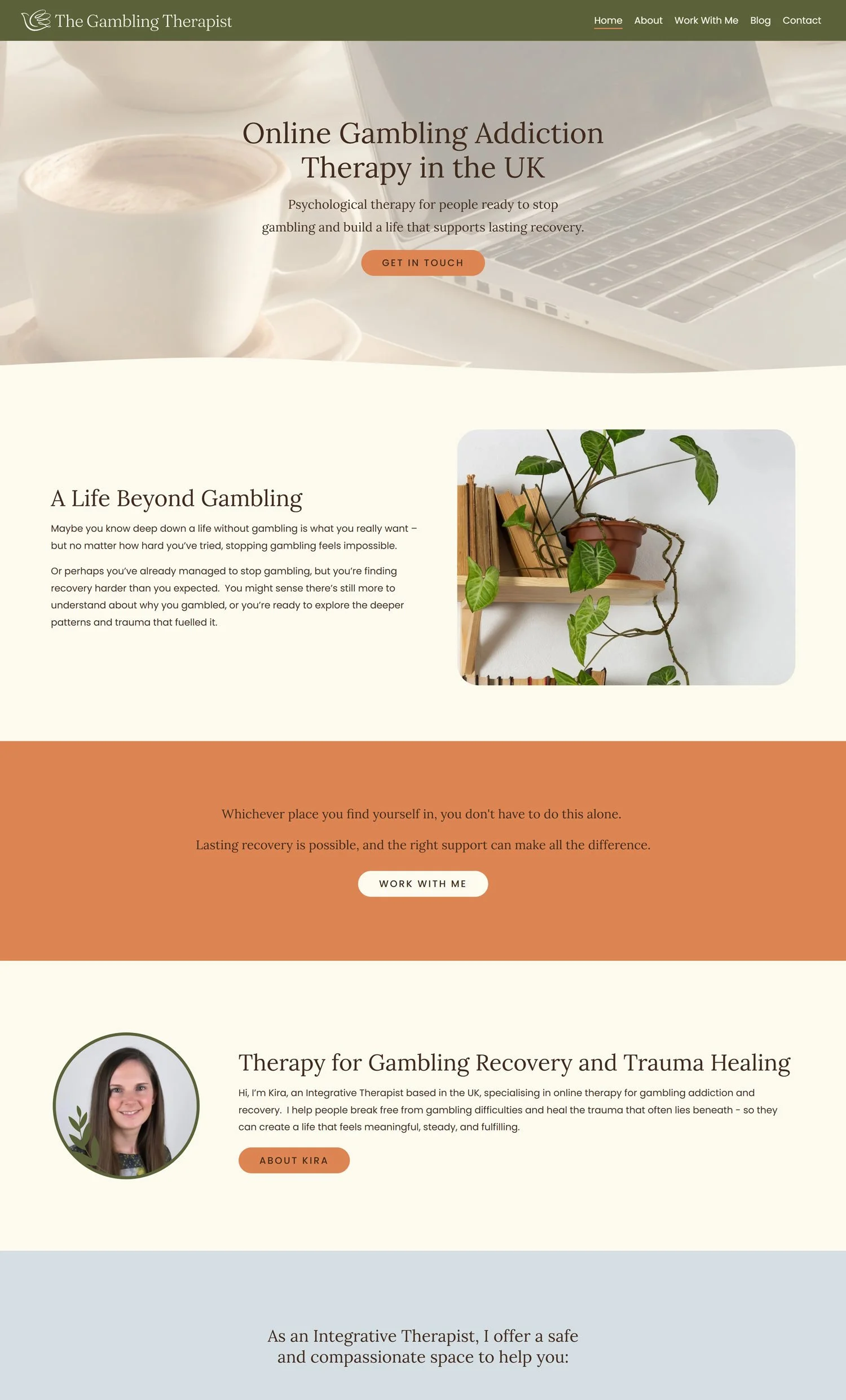
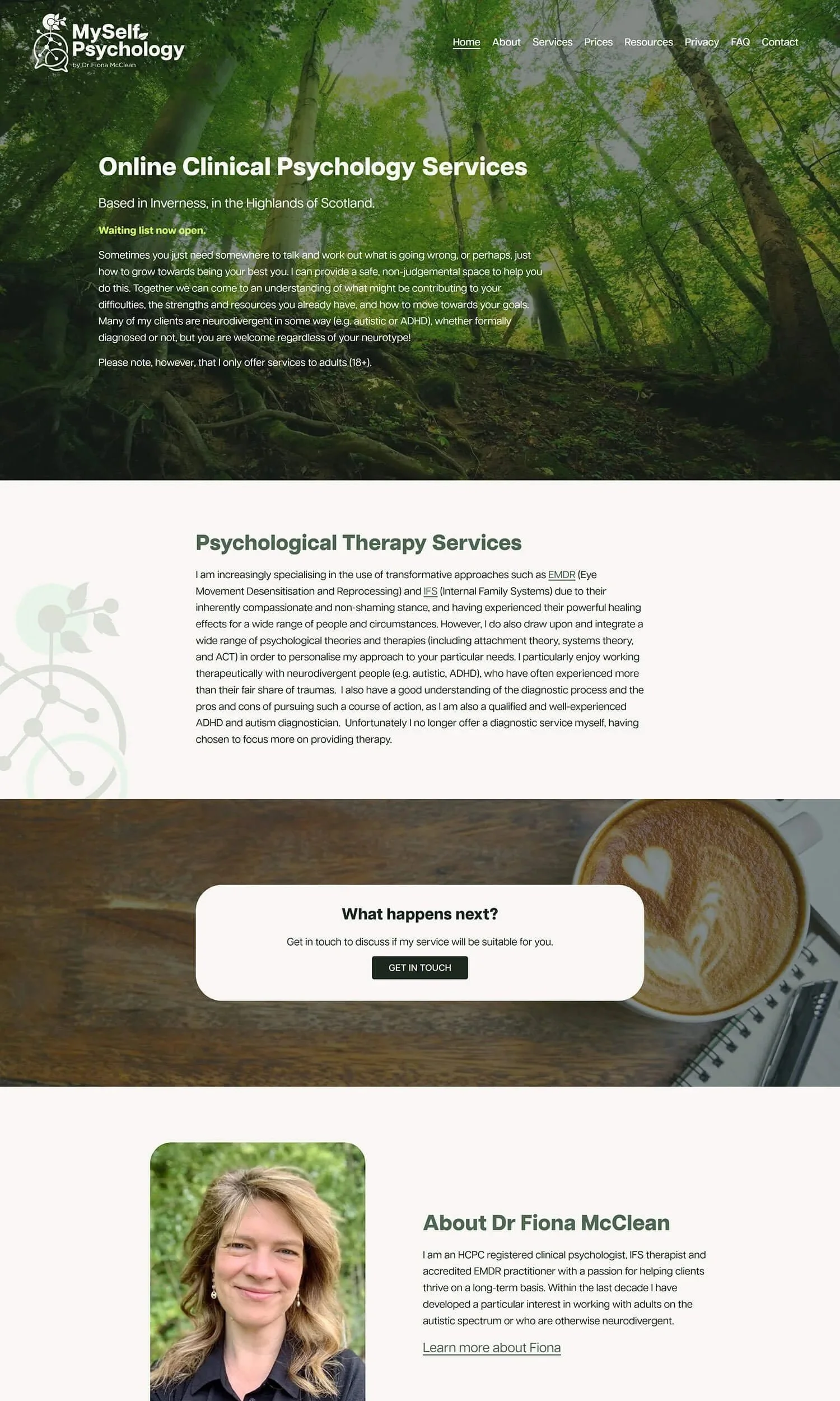
It gives potential clients a place to learn more about you at their own pace. They can read about your approach, see your face, understand the practical details, and get a better sense of whether you feel like the right person to contact.
A strong therapist website should add:
Warmth
Your website should help people feel that there is a real person behind the professional profile. Thoughtful copy, natural images and a calm visual style can all help potential clients feel more at ease.
Depth
Your website gives you space to explain your specialisms, your approach and the kind of support you offer in more detail than a directory listing allows.
Clarity
People should be able to quickly understand where you are based, who you work with, how sessions work, what you charge, and what the next step is.
Practical reassurance
A website can answer many of the questions someone may feel unsure about asking. This might include what happens in a first session, whether you offer online therapy, how to book an introductory call, or what your therapy room looks like.

Related: SEO for Small Businesses >
Pages every therapist website needs
A therapist website does not need to be complicated, but it does need to be clear. These are the core pages I would usually recommend.
Home
Your homepage should give visitors an immediate sense of who you are, where you are based, who you help, and how they can take the next step.
It should not overwhelm people with too much information. Instead, it should guide them towards the most useful parts of your website.
A strong homepage might include:
A clear introduction to your practice
Your location or whether you work online
The main issues or life experiences you support people with
A short introduction to you
A simple overview of your services
A clear way to get in touch
About
Your About page is one of the most important pages on your therapy website.
Potential clients want to know that you are qualified and experienced, but they also want to get a sense of you as a person. This does not mean you need to share deeply personal details. It simply means writing in a way that feels human, grounded and reassuring.
Your About page can include:
Your professional background
Your qualifications and memberships
Why you do this work
Your approach to therapy
The kind of clients you tend to support
A warm, professional photograph of you
Services
Your Services page should help people understand what you offer and whether it is right for them.
This page might include:
Who you work with
The types of therapy you offer
What sessions are like
Whether you offer online, in-person or hybrid sessions
Whether you offer a free introductory call
Your fees
How to book or enquire
If you work with several different groups or specialisms, you may want separate sections or pages for each.
Blog or Resources
A blog can be a helpful way to share more about your therapy style, areas of expertise and the kinds of issues you support clients with.
It can also help with SEO, especially if you write articles based on the questions potential clients are already searching for.
For example, you could write about:
Anxiety
Burnout
Grief
Trauma
Relationship patterns
Starting therapy for the first time
What to expect from a first session
The difference between therapy approaches
Your blog does not need to be updated constantly. A small number of thoughtful, useful articles can still add a lot of value.
Contact or Booking
Your Contact page should make the next step feel simple.
When someone reaches this page, they may already feel nervous about getting in touch. The clearer and calmer you can make the process, the better.
Include:
How to contact you
What information to include in an enquiry
Whether you offer an introductory call
Your current availability, if appropriate
Where sessions take place
Photos of the building or therapy room, if useful
A short note about what happens after they enquire

Therapies or Specialisms
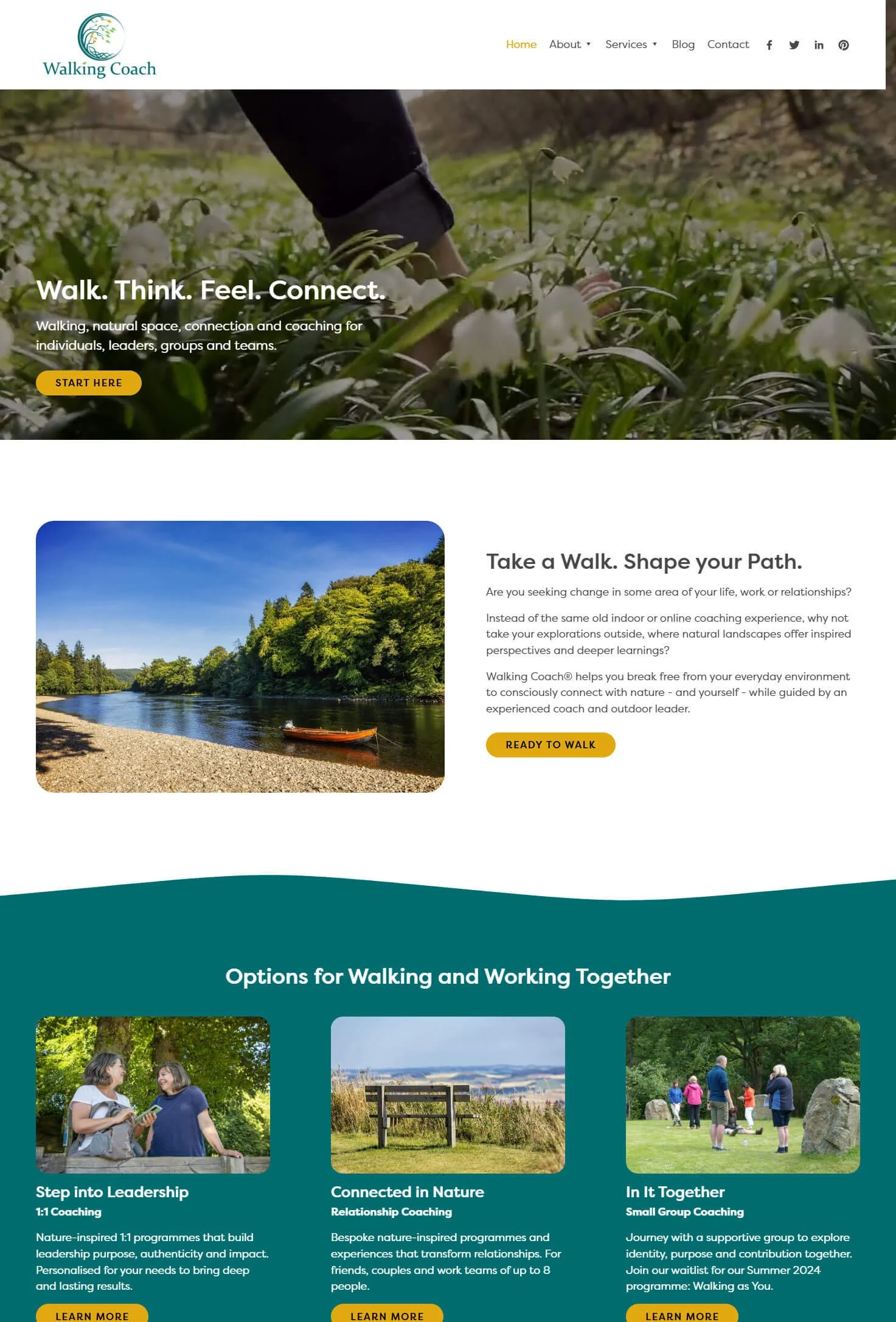
Depending on how you work, you may want individual pages for your therapy approaches or specialist areas.
For example:
EMDR therapy
Couples counselling
Trauma therapy
Anxiety counselling
Therapy for grief and loss
Therapy for burnout
Online therapy
These pages can be useful for both potential clients and search engines because they allow you to go into more depth.
FAQs
An FAQ page can answer the practical questions people may have before making contact.
You might include questions such as:
How do I know if therapy is right for me?
What happens in the first session?
Do you offer online sessions?
How long does therapy usually last?
What are your fees?
Do you offer concession rates?
What is your cancellation policy?
Is everything confidential?
Answering these questions clearly can reduce uncertainty and help people feel more comfortable taking the next step.
Policies
Your website should also include the appropriate policies for your practice and website.
This may include:
Privacy policy
Cookie policy
Terms or therapy agreement
Cancellation policy
GDPR information
How you handle enquiry forms and personal data
As a therapist, your website may involve sensitive personal information, particularly if people share details about their situation through a contact form. It is important to make sure your policies and enquiry process are appropriate for your practice.
Images for your therapist website
It can be challenging to choose images for a therapist website.
Therapy is not the kind of service where you can show a simple before and after. You also may not want to use images that feel too staged, clinical or generic.
But the right images can make a huge difference to how your website feels.
Images of you
A clear, warm headshot is one of the most important images to include on your website.
Potential clients want to know who they are contacting. A relaxed, confident image of you looking towards the camera can help people feel more familiar with you before they take that first step.
Alongside a headshot, it can be helpful to include a few more natural, informal images.
For example:
You working at your desk
You writing or making notes
You in your therapy room
You outside in a local landscape
You in your garden or another calm setting
A staged mid-session image with a friend or colleague acting as the client
These images should still feel professional, but they do not need to feel overly polished or corporate. The aim is to help people get a genuine sense of you.
Images of your space
If you work in person, photographs of your therapy space can be very reassuring.
Someone may feel nervous before their first session, especially if they do not know what to expect. Seeing the room, the entrance or the building can help the experience feel more familiar before they arrive.
When photographing your space, try to make it feel calm, warm and inviting. Natural light, simple styling and small touches that reflect your brand can help bring the space together.
Stock images
If you are in the early stages of your practice, it may not be possible to arrange a full brand photoshoot straight away.
Stock images can still work well, but it is worth choosing them carefully. Try to avoid the most obvious therapy-related images, such as generic paths, trees, stones or waves, especially if they appear on many other websites.
Look for images that feel aligned with your tone, your location and the kind of atmosphere you want to create. Paid stock images can sometimes be a good option if you want something that feels less widely used.
What your website needs to make clear
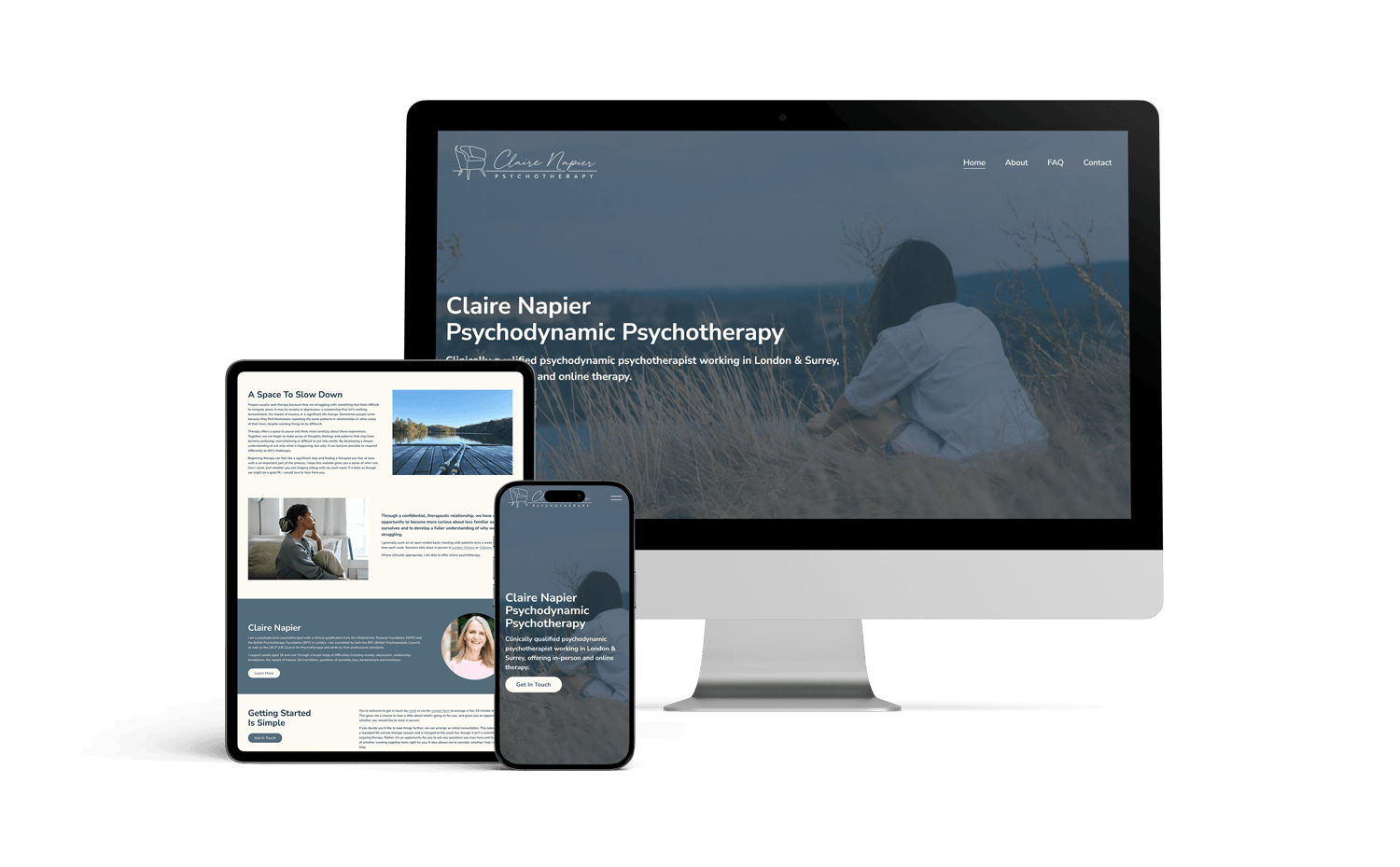
Whether your website is simple or more detailed, visitors should be able to understand the essential information quickly.
Your website should make clear:
Where you are based
Whether you work online, in person or both
Who you work with
The issues or experiences you support people with
How you work
Your approach to therapy
Your pricing
Your availability, if appropriate
How to book or enquire
What happens next
These details may seem obvious, but they make a huge difference. When someone is already feeling unsure, they should not have to search through your website to work out whether they can contact you.
Your directory profile and website should work together
You do not need to choose between a directory listing and a website. Ideally, they should support each other.
Your directory profile helps people find you. Your website helps them understand you.
A strong directory profile can give potential clients the essentials, while your website gives them the fuller picture. Together, they create a clearer and more reassuring journey from first discovery to enquiry.
If someone finds you through a directory and feels drawn to your profile, your website gives them somewhere to go next. It allows them to spend more time with your words, your approach and your presence before deciding whether to get in touch.
That extra layer of connection can be incredibly valuable.
Need help creating a therapist website?
If you are a therapist, counsellor or wellness practitioner and you are ready to create a website that goes beyond a directory profile, I can help.
I design calm, considered Squarespace websites that help therapists communicate clearly, build trust and feel confident sending potential clients to their online home.
Whether you are creating your first private practice website or improving an existing one, your website can help the right clients feel more informed, reassured and ready to contact you.
You can get in touch to enquire about working together, or download my free therapist website prompts to start turning your directory profile into a fuller, more personal website.